
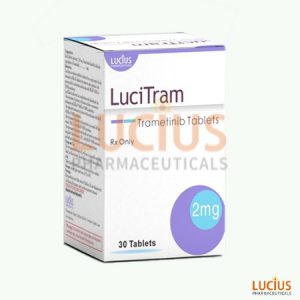
卢修斯 曲美替尼 Trametinib 在线购买
曲美替尼是丝裂原激活的细胞外信号调节激酶 1 (MEK1) 和 MEK2 的可逆抑制剂。它通过抑制MEK蛋白的活性和阻断MAPK的信号通路来抑制癌细胞的增殖和转移。
查看商品
KESHAV Medicine
达拉非尼联合曲美替尼辅助治疗BRAF V600突变型III期黑色素瘤:COMBI-AD试验的最终结果 ASCO Post
Georgina V. Long, MD, PhD, of the Melanoma Institute Australia and the University of Sydney, and colleagues reported the final follow-up analysis of the phase III COMBI-AD trial at the 2024 ASCO Annual Meeting (Abstract 9500) and published their findings in The New England Journal of Medicine. 1 With a maximum follow-up of more than 10 years, and a median follow-up of 8 years, continued improvements were seen in relapse-free and distant metastasis–free survival, as well as a 20% lower risk of death, with the adjuvant combination of the BRAF-targeted agent dabrafenib plus the MEK inhibitor trametinib in patients with resected stage III melanoma and BRAF V600E or V600K mutations. The previously reported primary analysis revealed a significantly longer duration of relapse-free survival with 12 months of treatment with the combination. It supported the April 2018 U. S. Food and Drug Administration approval of dabrafenib plus trametinib in this setting. “, the 5-year results of this trial showed that adjuvant therapy with this combination resulted in longer relapse-free survival and distant metastasis–free survival than the placebos, ” the investigators remarked. “Longer-term data were needed, including data regarding overall survival. ” In this double-blind trial, a total of 870 patients were randomly assigned in a 1: 1 ratio to receive either 150 mg of dabrafenib twice daily plus 2 mg of trametinib once daily (n = 438) or two matched placebos (n = 432) for 12 months. Follow-up data were provided for median durations of 8.3 and 6.9 years, respectively. The baseline characteristics were reported to be well balanced between the arms;
however, according to the investigators, Black patients were underrepresented. The key secondary endpoint for this long-term follow-up analysis was overall survival. Relapse-free survival was evaluated as the primary endpoint. Other secondary endpoints included distant metastasis–free survival and safety. At 8 years, dabrafenib plus trametinib vs the placebos seemed to confer a nonsignificant overall survival benefit (estimated rate, 71% vs 65%;
hazard ratio for death = 0.80; 95% confidence interval = 0.62–1.01; stratified log-rank P =. 06). The investigators reported consistent results across several prespecified subgroups, including the 792 patients harboring a BRAF V600E mutation (HR for death = 0.75; 95% CI = 0.58–0.96). The median duration of relapse-free survival was 93.1 months with dabrafenib plus trametinib and 16.6 months with placebo (HR for relapse or death = 0.52;
95% CI = 0.43–0.63). A total of 28% and 37% of the patients who received these interventions, respectively, experienced a relapse with distant metastasis (HR for distant metastasis or death = 0.56;
95% CI = 0.44–0.71). The estimated 10-year relapse-free survival rate was 48% with dabrafenib plus trametinib and 32% with placebo. As for distant metastasis–free survival, the rates were 63% and 48%, respectively. Adverse events were documented in 97% of the patients treated with dabrafenib plus trametinib and in 88% of those who received the placebos. A total of 41% and 13% of these treatment arms, respectively, experienced a serious adverse event. The investigators observed no new safety signals. A higher incidence of primary or secondary cancer was reported with dabrafenib plus trametinib vs the placebos (events per 100 patient-years: 4.0 vs 2.6);
according to the investigators, this was likely the result of protocol-mandated skin surveillance and more patients staying on protocol from the dabrafenib and trametinib arm. However, none led to death in the investigational arm. Skin cancers, including basal cell carcinoma, new primary malignant melanoma, and squamous cell carcinoma, were most frequently documented. With a maximum follow-up of more than 10 years on each arm, the investigators concluded: “One year of adjuvant therapy with dabrafenib plus trametinib was associated with better relapse-free survival and distant metastasis–free survival than the placebos, no long-term safety concerns, and a 20% lower risk of death than the placebos (although the benefit was not significant), as well as a 25% lower risk of death among patients with melanoma with a BRAF V600E mutation. ” DISCLOSURE: The study was funded by GlaxoSmithKline and Novartis. For full disclosures of the study authors, visit nejm. org. 1. Long GV, Hauschild A, Santinami M, et al: Final results for adjuvant dabrafenib plus trametinib in stage III melanoma. N Engl J Med. June 19,2024 (early release online).
系统已根据文章标题、摘要和正文内容,自动匹配当前在售商品中的强相关药品。
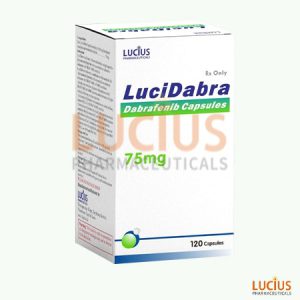
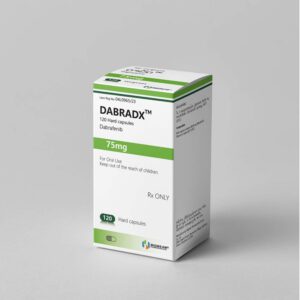
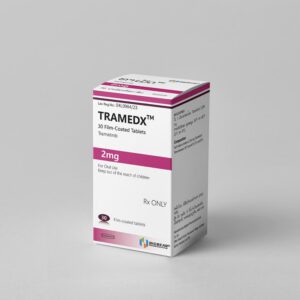
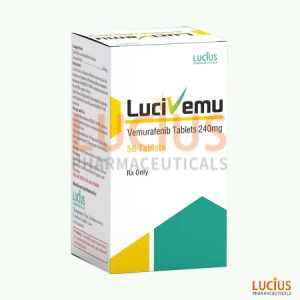
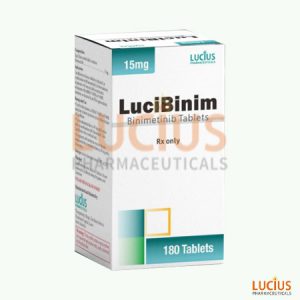
系统已根据文章内容自动匹配到相关商品,包括:卢修斯 曲美替尼 Trametinib 在线购买、卢修斯 达拉非尼 Dabrafenib 在线购买、大熊 达拉非尼胶囊 DABRADX Dabrafenib 75mg 在线购买、大熊 曲美替尼片 TRAMEDX Trametinib 2mg 在线购买。
点击文章下方的相关商品卡片,即可查看商品规格、价格、说明和评价。
不能。本文只提供一般药品信息和健康教育,具体用药应遵循医生处方和药师指导。