

Regarding the recall alert for ONO PHARMACEUTICAL CO., LTD.’s OPDIVO (batch number as attached), the domestic licensed manufacturer has initiated its own recall operation.
有關ONO PHARMACEUTICAL CO., LTD.藥品OPDIVO(批號如附件)回收警訊,國內許可證持有廠商已啟動自主回收作業。日本PMDA及MHLW於115年2月6日發布藥品訊息,…
Full Article Content
Regarding the recall alert for ONO PHARMACEUTICAL CO. , LTD. 's drug OPDIVO (batch number attached), domestic licensed manufacturers have initiated voluntary recall operations. On February 6,2026, the Japanese PMDA and MHLW issued a drug information notice stating that ONO PHARMACEUTICAL CO. , LTD. 's drugs "OPDIVO I. V. Infusion" (batch number attached) and "OPDIVO" (batch number attached) contained foreign matter (metal particles), hence the recall. According to the Food and Drug Administration's investigation, the affected drug in Taiwan is "保疾伏 (Ministry of Health and Welfare Bureau Medical Products Administration Certificate No. 001013)" (22 batches in total), and a recall request was sent to the manufacturer on February 10,2026. An investigation revealed that the Ministry of Health and Welfare approved the drug "Baojifu (Ministry of Health and Welfare Disease Control Permit No. 001013), " with the applicant being Taiwan Ono Pharmaceutical Co. , Ltd. , and the manufacturer being ONO PHARMACEUTICAL CO. , LTD. FUJIYAMA PLANT / Ono Pharmaceutical Co. , Ltd. Yamaguchi Plant. The main ingredient is nivolumab, and its approved indications are as follows. This drug is a prescription drug and can only be used after a doctor's diagnosis and prescription. 1. Unresectable or metastatic melanoma: Monotherapy or in combination with ipilimumab is indicated for the treatment of patients with unresectable or metastatic melanoma. 2. Adjuvant therapy for melanoma: Applicable as adjuvant therapy for patients with melanoma that has invaded lymph nodes or has metastasized and who have previously undergone complete resection. 3. Preoperative adjuvant therapy for resectable non-small cell lung cancer: Platinum-containing chemotherapy is applicable as preoperative adjuvant therapy for adult patients with resectable (tumor ≥ 4 cm or lymph node positive) non-EGFR or ALK tumor gene abnormalities. 4. Non-small cell lung cancer: (1) Ipilimumab is applicable as first-line therapy for adult patients with metastatic or recurrent non-small cell lung cancer (NSCLC) who have PD-L1 (≥ 1%) and do not have EGFR or ALK tumor gene abnormalities. (2) Combination with ipilimumab and two cycles of platinum-containing chemotherapy is indicated for first-line treatment of adult patients with metastatic or recurrent non-small cell lung cancer (NSCLC) without EGFR or ALK tumor gene abnormalities. (3) Concomitant use of carboplatin, paclitaxel, and bevacizumab is indicated for first-line treatment of adult patients with metastatic or recurrent non-squamous NSCLC who do not have EGFR or ALK tumor gene abnormalities. (4) It is indicated for patients with advanced NSCLC whose disease has worsened during or after platinum-based chemotherapy. If the patient has EGFR or ALK tumor gene abnormalities, the disease must have worsened after treatment with an EGFR or ALK inhibitor. 5. Malignant pleural mesothelioma: Concomitant use of ipilimumab is indicated for first-line treatment of adult patients with unresectable malignant pleural mesothelioma. 6. Renal cell carcinoma: (1) Applicable to patients with advanced renal cell carcinoma who have previously received anti-angiogenic therapy. (2) Ipilimumab can be used in combination to treat intermediate/poor-risk patients with previously untreated advanced renal cell carcinoma. (3) Cabozantinib is appropriate for patients with previously untreated advanced renal cell carcinoma. 7. Head and neck squamous cell carcinoma: Applicable to patients with recurrent or metastatic head and neck squamous cell carcinoma (SCCHN) whose disease has worsened during or after platinum-based chemotherapy. 8. Typical Hodgkin's lymphoma: Applicable to adult patients with typical Hodgkin's lymphoma who have relapsed or worsened after treatment with the following: (1) autologous hematopoietic stem cell transplantation (HSCT) and brentuximab vedotin, or (2) three or more systemic therapies, including autologous hematopoietic stem cell transplantation (HSCT). This indication was granted accelerated approval based on the objective response rate. Continued approval of this indication requires a subsequent confirmatory trial to demonstrate clinical benefit. 9. Urothelial carcinoma: (1) In combination with cisplatin and gemcitabine for first-line treatment of adult patients with unresectable or metastatic urothelial carcinoma. (2) Applicable to patients with locally advanced unresectable or metastatic urothelial carcinoma that has worsened during or after platinum-containing therapy. This indication was granted accelerated approval based on tumor response rate and duration of response. The continued approval of the indication requires a confirmatory trial to demonstrate that it has achieved clinical benefits. (3) It is indicated for adjuvant therapy in patients with urothelial carcinoma at high risk of recurrence after radical resection. 10. Gastric cancer, gastroesophageal cancer or esophageal adenocarcinoma: (1) Concomitant fluoropyrimidine and platinum-containing chemotherapy is indicated for the treatment of patients with advanced or metastatic gastric cancer or gastroesophageal junction (GEJ) or esophageal adenocarcinoma that does not show HER2 hyperactivity. (2) It is indicated for the treatment of patients with advanced or recurrent gastric cancer or gastroesophageal cancer who have previously received two or more chemotherapy treatments. 11. Hepatocellular carcinoma: (1) Concomitant ipilimumab is indicated for first-line treatment of adult patients with unresectable or metastatic hepatocellular carcinoma (HCC). (2) Concomitant ipilimumab is indicated for treatment of adult patients with hepatocellular carcinoma (HCC) who have previously received sorafenib. 12. Metastatic colorectal cancer: (1) Concomitant ipilimumab is indicated for adult patients with unresectable or metastatic high microsatellite instability (MSI-H) or mismatch repair deficient (dMMR) colorectal cancer (CRC). (2) Single-agent therapy is indicated for adult patients with metastatic high microsatellite instability (MSI-H) or mismatch repair deficient (dMMR) colorectal cancer whose disease has worsened after treatment with fluoropyrimidine, oxaliplatin, and irinotecan. 13. Esophageal squamous cell carcinoma: (1) Combination with chemotherapy containing fluoropyrimidine and platinum is indicated for first-line treatment of patients with advanced or metastatic esophageal squamous cell carcinoma (ESCC). (2) Combination with ipilimumab is indicated for first-line treatment of patients with advanced or metastatic esophageal squamous cell carcinoma (ESCC). (3) Applicable to patients with unresectable advanced or recurrent esophageal squamous cell carcinoma who have worsened after receiving combined platinum and fluoropyrimidine chemotherapy. 14. Adjunctive therapy for esophageal or gastroesophageal cancer resection: Applicable to patients with esophageal or gastroesophageal cancer who have received neoadjuvant concurrent chemoradiotherapy and complete surgical resection, and whose pathological examination confirms that residual tumor remains in the resected tissue. To ensure drug safety and medical efficacy, The Ministry of Health and Welfare has established a drug safety monitoring system to monitor domestic and international drug safety information in real time. In addition to a drug adverse reaction reporting system and a drug adverse product reporting center, the safety and efficacy of drugs are constantly reassessed. If medical personnel or patients suspect that an adverse reaction has occurred due to the use (or taking) of a drug, please immediately report it to the National Drug Adverse Reaction Reporting Center established by the Ministry of Health and Welfare. The drug adverse reaction reporting hotline is 02-2396-0100, and the website is:
文章相關商品
系統已根據文章標題、摘要和正文,自動匹配目前在售的強相關藥品。
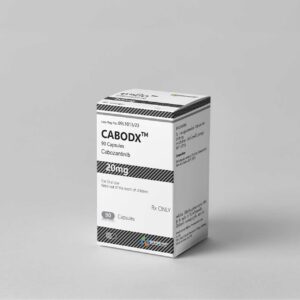
卡博替尼片/膠囊 CABODX Cabozantinib 20/60/80mg
卡博替尼(Cabozantinib)於2012年11月29日獲FDA核准上市,用於治療進行性、轉移性甲狀腺髓樣癌;用於治療晚期腎癌;用於第二線治療晚期肝癌。 卡博替尼是一種多受體酪胺酸激酶抑制劑。卡博替尼抑制RET、肝細胞生長因子受體、血管內皮生成因子受體1(VEGFR-1 、VEGFR-2、VEGFR-3)、幹細胞生長因子受體(KIT) 、酪氨酸激酶受體(TRKB) 、FMS樣酪氨酸激酶3(FLT-3) 、AXL及上皮生長因子樣域酪氨酸激酶2(TIE-2)...
查看商品
常見問題
Which products are related to this article?
The system matched these relevant products from the article content: 盧修斯 卡博替尼 Cabozantinib 線上購買、卡博替尼片/膠囊 CABODX Cabozantinib 20/60/80mg.
How can I view the medicines discussed in this article?
Use the related product cards below the article to review available specifications, prices, product information, and reviews.
Does this article replace advice from a doctor or pharmacist?
No. This content is for general information and health education only. Follow the prescription and individual guidance provided by qualified healthcare professionals.