Main text
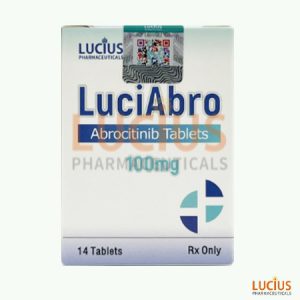
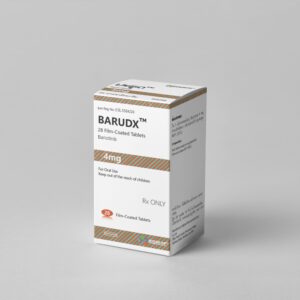
On April 11, the National Medical Products Administration (NMPA) of China announced that Pfizer’s oral JAK1 inhibitor abrocitinib (trade name in Chinese) has been approved for marketing in China. It is indicated for adult patients with refractory, moderate to severe atopic dermatitis who have not responded well to or are unsuitable for other systemic therapies (such as hormones or biologics). This is Pfizer’s second JAK inhibitor approved in China.
Abuxitinib tablets are a once-daily oral JAK1 inhibitor. JAK is an intracellular enzyme that mediates signal transduction resulting from the interaction of cytokine or growth factor receptors on the cell membrane, thereby affecting hematopoietic and immune cell functions. Abuxitinib reversibly and selectively inhibits JAK1 by blocking the adenosine triphosphate (ATP) binding site.
Back in February 2021, the CDE (Center for Drug Evaluation) accepted the marketing application for abuxitinib tablets, and in March of the same year, it was included in the priority review process. It is intended for the treatment of patients aged 12 years and older with moderate to severe atopic dermatitis. It is worth noting that this year, JAK inhibitors have accelerated their entry into the domestic market, becoming another battleground for pharmaceutical companies.
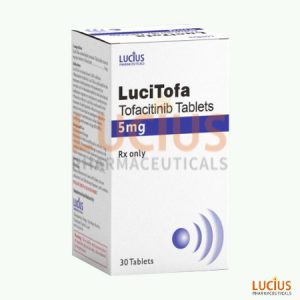
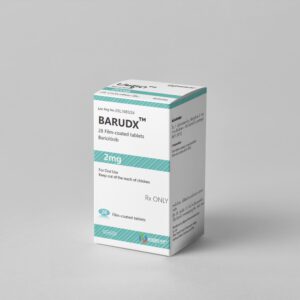
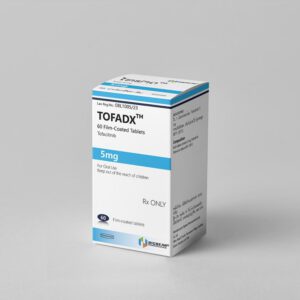
In addition to Pfizer’s newly approved oral JAK1 inhibitor abuxitinib tablets, AbbVie’s JAK inhibitor utpatinib has secured three new indications in just over a month. As of now, according to Sina Pharma statistics, five JAK inhibitors have been approved in my country: Novartis’ ruxolitinib, Eli Lilly’s baricitinib, Pfizer’s tofacitinib, AbbVie’s utpatinib, and Pfizer’s abuxitinib. Their indications primarily cover rheumatoid arthritis, myelofibrosis, and atopic dermatitis. In recent years, JAK inhibitors have experienced rapid growth in the Chinese market.
According to data from PharmCloud, JAK inhibitors surpassed 100 million yuan in sales for the first time in 2020, reaching 200 million yuan, a year-on-year increase of 659%. In the first three quarters of 2021, in-hospital sales exceeded 500 million yuan, a year-on-year increase of 200%. With the continued surge in JAK1 inhibitor research and development, although no domestically produced JAK1 inhibitors have yet been approved for market launch, a number of domestic manufacturers are closely following suit, successively deploying JAK inhibitors, leading to increasingly fierce competition.
According to incomplete statistics from Sina Pharma, there are currently more than 10 pharmaceutical companies in my country developing JAK inhibitors. Among them, the companies with the fastest clinical progress include: With more and more pharmaceutical companies entering the market and receiving approvals, the market prospects for JAK inhibitors may become even broader. JAK1 inhibitors, as one of the most popular targets, are also seeing rapid development in overseas markets.
According to incomplete statistics from Sina Pharma, the globally approved JAK inhibitors mainly include (based on first-time market launch date): Generally speaking, first-generation non-selective JAK inhibitors all contain adenine-like structures in their parent nuclei, thus generally suffering from low selectivity. However, the adverse effects of first-generation JAK inhibitors on patients are largely predictable, including infections, anemia, neutropenia, lymphopenia, cardiovascular disease, gastrointestinal perforation, and hyperlipidemia. Second-generation JAK inhibitors can selectively inhibit JAK family members, thus enabling the inhibition of specific disease-related signaling pathways while maintaining the function of other cytokines, and are therefore highly anticipated in research and development.
However, the development of JAK1 inhibitors still faces challenges. Their safety and tolerability are issues of great concern to the industry and urgently need to be addressed. JAK kinase, abbreviated JAK, derives its name from Janus, the two-faced Roman god representing beginning and end, because JAK kinase possesses two almost identical phosphate transfer domains.
One domain exhibits kinase activity, while the other domain regulates the activity of the first kinase. JAK kinases are a family of intracellular non-receptor tyrosine kinases that mediate cytokine production signals and transmit them through the JAK-STAT signaling pathway. The JAK-STAT pathway is one of the few proven immune regulatory pathways, thus JAK inhibitors have the potential to play a significant role in the treatment of autoimmune diseases.
However, the potential dangers of JAK1 inhibitors are gradually becoming apparent. In particular, in the past two years, the FDA has issued warnings about the increased risk of serious cardiac events, cancer, thrombosis, and death caused by JAK inhibitors, and has repeatedly delayed the review of JAK inhibitor drugs, further raising industry awareness of their potential risks. How to overcome the safety and drug resistance issues of JAK inhibitors will be a key challenge for pharmaceutical companies in the future.
In September 2021, abuxitinib was first approved for marketing in the UK for the treatment of moderate to severe atopic dermatitis in adults and adolescents aged 12 years and older. On January 14, 2022, abuxitinib was approved for marketing in the US, with recommended doses of 100 mg and 200 mg. It previously received Breakthrough Therapy and Priority Review designations from the FDA. First-generation non-selective JAK inhibitors include: ruxolitinib, tofacitinib, baricitinib, peficitinib, and delgocitinib.
Second-generation selective JAK inhibitors: AbbVie’s utpatinib (Rinvoq), Sanofi/Celgene’s fedratinib (Inrebic), and Pfizer’s abuxitinib (Cibinqo). ♦ On February 24, 2022, the NMPA website showed that AbbVie’s JAK inhibitor utpatinib extended-release tablets were approved for systemic treatment of adult and adolescent patients aged 12 years and older with moderate to severe atopic dermatitis (AD).
♦ On March 22, 2022, the NMPA website showed that AbbVie’s Reifal (utpatinib extended-release tablets) had been approved for the treatment of adult patients with moderate to severe active rheumatoid arthritis who have had an inadequate response to or are intolerant of one or more TNF inhibitors. ♦ On April 6, 2022, the NMPA website showed that AbbVie’s utpatinib extended-release tablets had been approved for the treatment of adult patients with active psoriatic arthritis (PsA) who have had an inadequate response to or are intolerant of one or more DMARDs.
♦JAK1: Primarily associated with acute lymphoblastic leukemia, acute myeloid leukemia, and malignant tumors of solid organs; ♦JAK2: Primarily associated with polycythemia vera, myelofibrosis, essential thrombocythemia, and other diseases; ♦JAK3: Primarily associated with acute megaloblastic leukemia, T-cell leukemia, and lymphoma, and other diseases;